
The Science Behind Brick Movement and Why Control Joints Are Needed in Brick Masonry
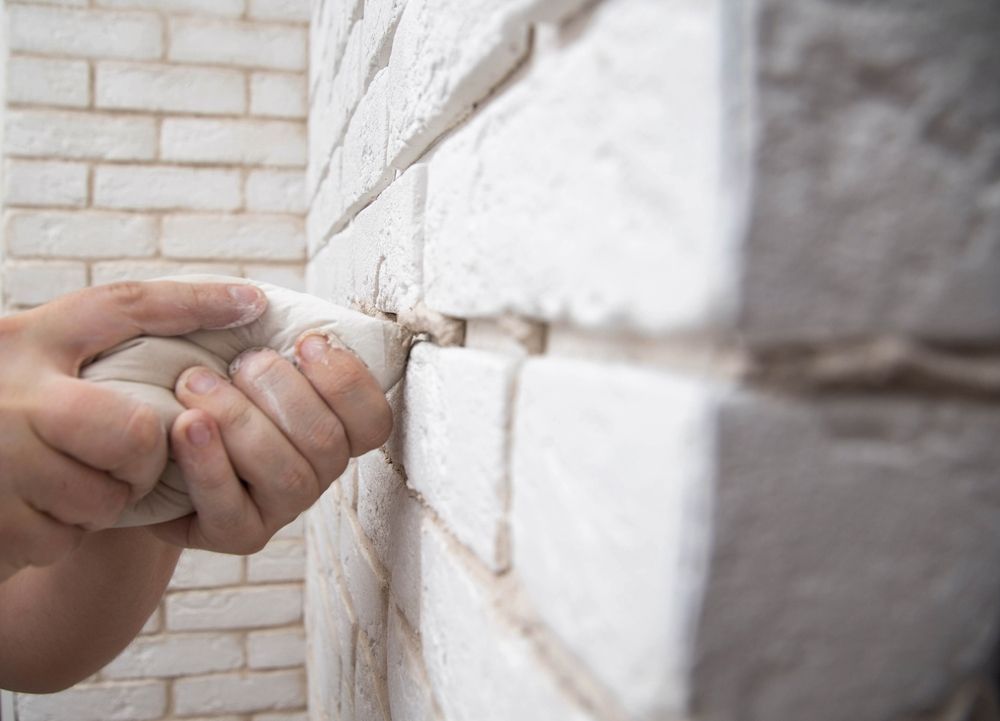
At Disciple Masonry, we know that clay brick masonry is legendary for its durability, often lasting for centuries. Yet, despite its rigid appearance, a brick facade is constantly in motion. Driven by environmental forces, these structures undergo invisible but powerful physical changes that can threaten their structural integrity if left unchecked.
The Mechanics of Expansion and Contraction
The secret to a long-lasting brick wall lies in understanding how clay behaves after leaving the manufacturing kiln. Fired at extremely high temperatures, new bricks emerge completely devoid of moisture. Once installed, they immediately begin absorbing atmospheric moisture, causing a permanent, lifelong expansion.
Simultaneously, brick walls experience daily and seasonal thermal cycles:
- Daytime: Direct sunlight heats the exterior surface, causing the materials to expand.
- Nighttime: As temperatures drop, the wall contracts.
This continuous cycle of permanent moisture expansion and daily thermal movement creates massive internal stress within a rigid masonry system.
Control Joints: The Structural Relief Valve
Without a built-in mechanism to accommodate this movement, a beautiful brick facade will eventually tear itself apart, resulting in catastrophic cracking and structural failure. To prevent this, architects and engineers calculate the expected movement before construction even begins. They strategically place flexible control joints (movement joints) throughout the brick veneer. These vertical separations act as a relief valve, allowing the rigid building envelope to breathe, move safely, and stand the test of time.
Managing Moisture Expansion in Clay Bricks
Moisture expansion represents the most significant source of movement in clay brick structures. According to the Brick Industry Association, clay masonry can expand by up to 0.15 inches per 100 feet over time. While this measurement sounds minor, the accumulated force can easily shatter mortar joints and shear metal wall ties.
The majority of this irreversible moisture expansion happens during the first few years after construction. Bricks pull moisture directly from the humid air, rainstorms, and even the wet mortar used during installation. Once the brick reaches its maximum expansion point, it will never shrink back to its original kiln-fired size.
Engineers must account for this permanent growth when designing long expanses of brick veneer. Failing to calculate this moisture expansion guarantees that the building will suffer from severe structural cracking. Proper joint placement absorbs this growth seamlessly, leaving the exterior facade looking flawless and functioning perfectly.
The Role of Mortar Joints in Masonry Movement and Structural Integrity
Disciple Masonry is an expert on brick mortar repair in Dublin. Mortar acts as the vital glue that holds thousands of individual bricks together in a single structural system. While mortar joints provide necessary adhesion, they also create a completely rigid barrier between the expanding clay blocks. This rigidity means the mortar cannot stretch or compress to accommodate the natural growth of the bricks.
Different types of mortar possess varying levels of compressive strength and flexibility. Harder mortars resist movement entirely, forcing the expanding bricks to crack under the immense internal pressure. Softer mortars might absorb a microscopic amount of movement, but they still require vertical breaks to prevent widespread damage.
Masons must follow precise mixing ratios to create mortar that balances strength with slight flexibility. However, even the most forgiving mortar mixture cannot replace the need for dedicated flexible breaks in the wall.
How Control Joints Prevent Masonry Cracking and Protect the Building Envelope
- Intentional, Flexible Breaks: Control joints act as continuous vertical separations built directly into the rigid brick masonry system, slicing completely through the brick wythe to separate the wall into smaller, independent segments.
- Stress Absorption: By breaking a massive wall into manageable sections, these joints absorb natural expansion and contraction without transferring stress.
- Flexible Sealant Function: The flexible sealant inside the joint compresses as the bricks grow and stretches as they shrink to accommodate movement.
- Mortar-Free Construction: A properly constructed control joint contains no mortar, as hard mortar would defeat the purpose of creating a flexible gap; masons leave a clean, empty vertical space running from the foundation to the roofline.
- Protection Against Seasonal Changes: This empty space gives adjacent brick panels plenty of room to expand during hot, humid summer months, preventing the panels from crashing into each other and shattering the delicate brick faces.
- Structural and Aesthetic Preservation: By isolating the movement, the overall building maintains its structural stability and aesthetic beauty regardless of the weather.
Masonry Expansion Joints vs. Control Joints
- The Common Misconception: Construction professionals often incorrectly use the terms "expansion joint" and "control joint" interchangeably on job sites, despite their technical differences.
- Concrete & Control Joints: Concrete structures utilize control joints specifically to manage material shrinkage as the wet concrete cures and dries over time.
- Brick & Expansion Joints: Brick masonry requires expansion joints to accommodate the continuous, long-term growth caused by moisture absorption and thermal heating.
- Engineering and Specifications: To maintain architectural accuracy, engineers must calculate the exact anticipated movement for each specific building using material standards set by the American Society for Testing and Materials (ASTM).
- Placement and Width: These engineering calculations dictate the precise width and spacing of every joint required to keep the structure intact.
- Material Behavior: Concrete block walls (which shrink) require completely different joint placements than traditional clay brick walls (which expand).
- Long-Term Durability: Understanding these distinct material behaviors allows architects to design building envelopes that successfully survive decades of environmental exposure.
Strategic Placement of Movement Joints in Architectural Design and Brick Masonry Construction
The effectiveness of a control joint relies entirely on its precise location within the architectural design. Engineers must place these vertical separations at specific intervals to prevent the accumulation of excessive stress. Generally, building codes require joints at regular distances along long, unbroken stretches of brick veneer.
Openings in the masonry, such as large windows and doorways, create natural stress concentrations in the surrounding wall. Masons must install flexible joints directly alongside these openings to prevent cracks from radiating outward from the corners.
Building codes dictate several specific locations that require immediate isolation:
- Directly alongside large window frames and commercial doorways
- Near building corners where intersecting walls move independently
- At locations where the wall height or thickness changes significantly
Changes in wall geometry demand isolation because different volumes of brick move at completely different rates. Building corners represent another critical area where expanding walls can collide and cause significant structural damage. Properly placed vertical breaks near these corners allow the adjacent walls to move independently without causing destructive friction.
Maintenance and Longevity of the Building Envelope and Masonry Construction
While brick masonry often lasts for centuries, the flexible materials inside control joints have a limited functional lifespan. Ultraviolet radiation, extreme weather, and continuous physical movement eventually degrade the elastomeric sealants. Most high-quality silicone sealants require replacement every fifteen to twenty years to maintain a watertight building envelope.
You should include joint inspection in your routine building maintenance schedule to catch early signs of failure. When you notice the sealant pulling away from the brick or developing surface cracks, immediate replacement is necessary. Delaying this simple maintenance task invites water infiltration and massive structural problems down the road.
A qualified restoration contractor can remove the old materials, clean the brick surfaces, and install fresh sealant. They use special tools to grind away any residue, giving the new silicone a perfect surface for adhesion. Regular maintenance, like
brick mortar repair in Jamison, of these vital gaps represents a tiny fraction of the cost of major masonry repairs.
Why Expansion Joints Are Needed in Brick Masonry for Long-Term Stability
Understanding the physical forces at play within clay masonry structures completely changes how you view brick masonry construction. Bricks are never truly static; they exist in a state of continuous motion driven by moisture and temperature changes. Expansion joints provide the critical flexibility required to absorb this movement and protect the structural integrity of the wall.
Without these vertical separations, the natural forces of expansion would easily destroy the rigid masonry system. Investing time in proper joint design and regular maintenance protects your building from catastrophic water damage and structural failure. By respecting the physical properties of building materials, architects and masons can construct brick facades that endure for generations.
The next time you look at a massive brick building, you will appreciate the subtle, flexible lines that hold the entire system together. These simple gaps represent a perfect marriage of structural engineering and practical construction techniques. Proper joint management guarantees that your masonry investment will stand strong against the test of time.
Contact us today!