
Natural Stone Veneer vs. Manufactured Stone: Which is Right for Your Home in the Suburbs?
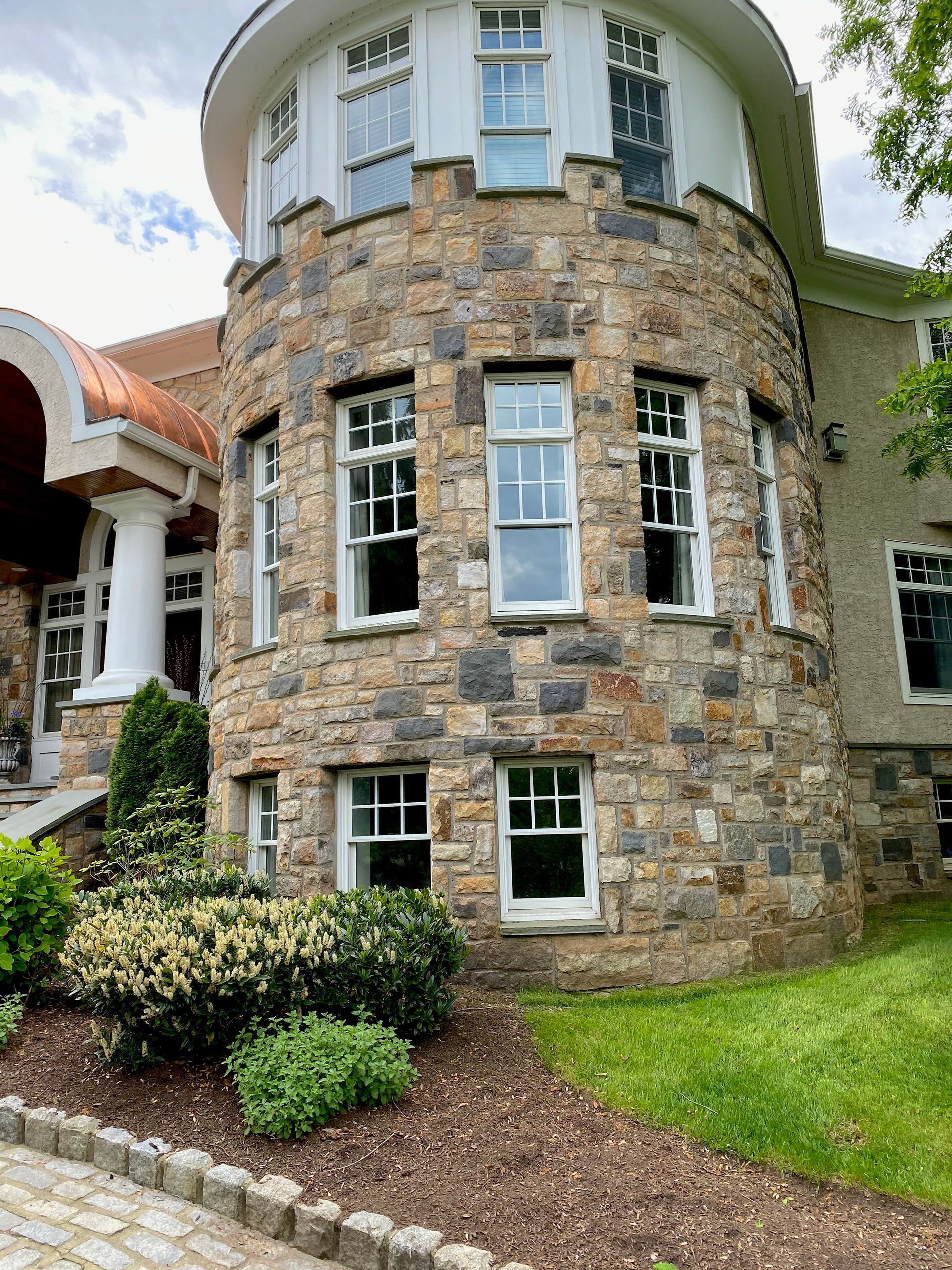
If you're weighing a stone facade, a new chimney chase or a front-entry accent, the first real decision isn't color or pattern: it's whether you want quarried stone or a cast concrete product. Both are legitimate choices, and both can look excellent when the stone veneer installation is done correctly, but they age very differently in our freeze-thaw climate. Here's how we walk homeowners in Bucks, Montgomery, and Delaware counties through the comparison.
The Short Answer
Natural stone veneer costs roughly 40 to 60 percent more installed, and it will almost certainly outlive the mortgage. Manufactured stone saves money up front and gives you consistent color and easy-to-handle pieces, but it fades, chips, and typically needs replacement or refacing somewhere in the 25 to 50 year window.
If the stone is going on a prominent street-facing elevation of an older home, we usually recommend natural. For a large ranch-style wainscot on a tight budget, manufactured often makes more sense.
What Natural Stone Veneer Actually Is
Natural thin veneer is real quarried stone (fieldstone, limestone, bluestone, granite, sandstone) sawn down to roughly 1 to 1.5 inches thick. It weighs about 10 to 15 pounds per square foot, so it usually installs over a properly prepared wall without a supporting ledge, though local code and the substrate always dictate that.
Full-bed natural veneer, at 3 to 5 inches thick, is the traditional approach we still use on restoration work in places like Ambler and Doylestown. It needs a foundation ledge or steel angle, but it reads as authentic masonry from any angle, including the returns at windows and corners.
What Manufactured Stone Is
Manufactured stone veneer is a lightweight concrete product: Portland cement, lightweight aggregate, and iron-oxide pigments cast in molds taken from real stone. At 6 to 9 pounds per square foot, it's roughly half the weight of natural thin veneer, which lowers labor time and structural requirements. The color, though, is only skin deep on many products, and that matters years later when a corner gets clipped by a mower or a snow shovel.
Cost: What Homeowners Around Actually Pay
Stone veneer installation costs can vary significantly from one project to another. Rather than pricing projects strictly by square footage, Disciple Masonry estimates each project based on the labor, materials, access, and preparation required for that specific installation.
Some of the biggest factors affecting cost include:
- Stone selection: Manufactured stone and natural thin stone veneer vary considerably in material cost and installation requirements.
- Existing conditions and preparation: Removing existing materials, repairing damaged substrates, or addressing water damage can add labor and materials.
- Project complexity: Corners, columns, chimneys, arches, windows, and detailed patterns require more cuts and installation time than large, uninterrupted wall sections.
- Access and staging: Height, scaffolding requirements, landscaping, and limited access can affect the labor required.
- Installation details: Flashing, drainage, transitions, caps, sills, and other details can affect both materials and installation time.
Because these factors can vary substantially even between projects of similar size, square-foot pricing alone may not provide an accurate estimate. Disciple Masonry evaluates each project individually and provides a detailed proposal based on the work required.
How Each One Handles Pennsylvania Winters
We average somewhere between 40 and 60 freeze-thaw cycles a year in the Philadelphia suburbs, and that's the single biggest stress on any veneer. Water gets in, freezes, expands about nine percent, and pushes the material apart from the inside.
Natural stone with low absorption (granite, most bluestone, dense limestone) shrugs this off for a century or more. Manufactured stone is more porous by nature, so its performance depends heavily on the drainage plane behind it and on the mortar joints staying tight.
We've torn off manufactured stone that failed at year 12 because it was installed directly to sheathing with no weep screed, and we've seen other installations at year 30 still looking sharp. The difference is almost always the water management, not the brand.
Can you install stone veneer over existing brick or stucco?
Often yes, provided the existing surface is sound, clean, and mechanically stable, though we still add lath and a scratch coat in most cases. We test adhesion and check for hidden moisture first, because bonding new stone to a failing substrate just hides a problem for a few years.
Installation Differences That Matter
The assembly behind the stone is where most problems start.
Whichever material you choose, a proper stone veneer installation over a framed wall includes these layers:
- Two layers of water-resistive barrier over the sheathing, lapped shingle-style.
- Corrosion-resistant metal lath fastened into studs, not just sheathing.
- A scratch coat of mortar, cured before setting stone.
- A weep screed at the base, held a minimum of 4 inches above grade and 2 inches above paved surfaces.
- Proper flashing and kickouts at every roof-to-wall junction.
Natural stone takes longer to set because each piece gets sorted, shaped, and fitted by hand. Manufactured stone arrives with pre-molded corners and flatter backs, so a crew can cover more wall per day, which is a real part of the cost gap.
Repair and Maintenance Down the Road
This is the part homeowners rarely think about at the quote stage, and it's where the two materials genuinely diverge. Stone veneer repair on natural stone is straightforward: we cut out the failed joint, match the mortar mix and color, and reset or replace individual stones from the same quarry run.
Repairing manufactured stone is harder, because the pigment fades with UV exposure. A replacement piece pulled from a current production batch rarely matches an eight-year-old wall, so we sometimes have to relocate stones from a hidden elevation and patch there instead.
Expect to repoint isolated joints on either material every 15 to 25 years, and plan on a breathable sealer for manufactured stone roughly every 5 to 7 years.
How long does stone veneer last?
Natural stone veneer commonly lasts 75 to 100 years or more, while manufactured stone typically performs well for 25 to 50 years before fading or spalling becomes noticeable. Mortar joints on both need attention sooner, usually somewhere in the 15 to 25 year range depending on exposure.Our team is available for stucco chimney repair in Bucks County and similar services across the area.
Talk Stone for Your Home
We'll walk your property, look at what's behind the wall as well as in front of it, and give you honest numbers for both natural and manufactured options.
Contact Disciple Masonry to schedule an on-site estimate.